
How to Register a Design Patent for Products in India
A footwear brand in Jaipur spends four months perfecting the sole pattern for its new sandal line. The design goes into production, sells well at a regional trade fair, and within a quarter, a near-identical sole shows up on a competitor's product at half the price. There is no registration certificate to point to, no clear legal basis to stop the copy, and no quick fix once the design has already been shown publicly. This is a scenario we see often at Riva Legal, and it is often preventable.
Many businesses search for "design patent" registration in India, but that term is borrowed from United States law. India does not have a design patent. Instead, the appearance of a product, its shape, pattern, or ornamentation, is protected under the Designs Act, 2000, administered by the Design Wing of the Patent Office. This guide walks fashion, product, and consumer goods businesses through what design registration actually covers, how the application process works, realistic timelines, and the most common reasons applications get rejected. It reflects the kind of design filing and enforcement work our firm handles for clients across India, including manufacturers and founders based in Jaipur and Rajasthan.
What Indian Law Actually Calls a "Design Patent"
Under Section 2(d) of the Designs Act, 2000, a "design" means features of shape, configuration, pattern, ornament, or composition of lines or colours applied to an article, whether in two or three dimensions, by any industrial process. The key requirement is that these features must appeal to the eye. A design registration protects how a product looks, not how it works.
This distinction matters because it separates design protection from three other IP categories businesses often confuse it with:
- Trademarks protect brand names, logos, and other source identifiers, not the shape of the product itself.
- Copyright protects original artistic works, but once a design is applied to more than 50 articles through an industrial process, copyright protection for that artistic work generally ends under Section 15(2) of the Copyright Act, 1957, making design registration the more suitable route for mass-produced goods.
- Utility patents protect functional inventions, how something works or is made, not its visual appearance.
Section 4 of the Designs Act also excludes certain things from registration: trademarks, property marks, artistic works already protected as copyright without industrial application, and any design that is not significantly distinguishable from known designs or combinations. Purely functional features, meaning shapes dictated only by the technical function of the article, are also excluded. If you are unsure whether your product's features are visual or functional, this is worth clarifying with an IP professional before you file, since it affects both eligibility and how the application is drafted. If your business is also weighing whether it needs a trademark registration for its brand name alongside design protection for the product itself, both usually need to be pursued together, not as substitutes for each other.
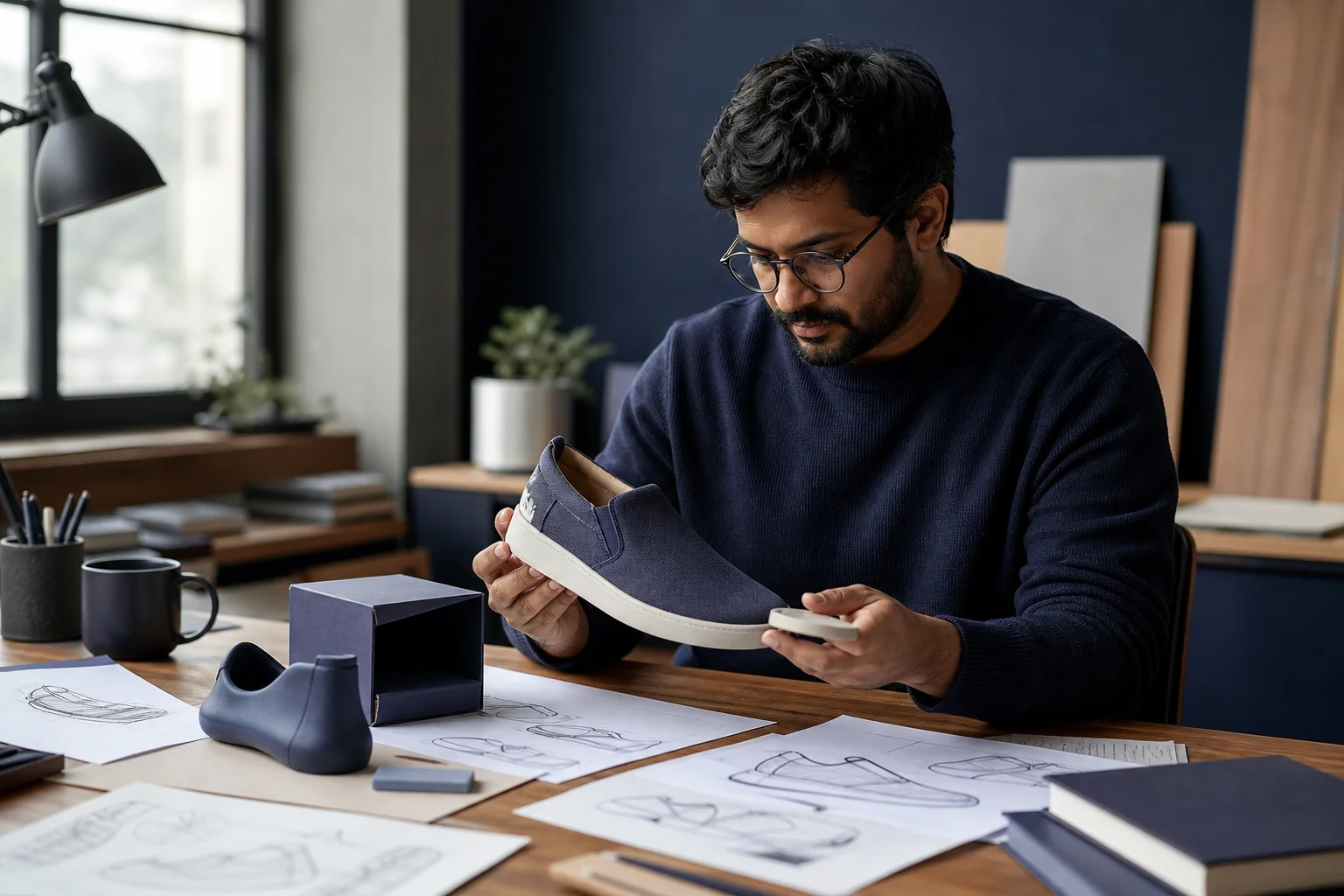
1. Check If Your Product Design Is Eligible for Registration
Before drafting an application, confirm that your design meets three core tests under the Designs Act.
Novelty and originality. The design must not have been published or used anywhere in India or abroad before the filing date. This includes your own prior disclosures. Posting product photos on Instagram, showcasing at a trade fair, or selling even a small batch without protection can count as prior publication and defeat novelty later.
Application to an article by an industrial process. The design must be capable of being applied to a specific article through manufacturing, whether by hand, mechanical, or chemical process, separately or in combination.
Appeal solely to the eye. The design must be judged by its visual appearance, not by any technical or mechanical consideration. A shape that exists purely to make a component function correctly, rather than to look a certain way, typically will not qualify.
Common examples of registrable designs we see in practice include footwear soles and uppers, packaging shapes and container silhouettes, furniture profiles, jewellery settings, textile and surface prints, and appliance housings. There is a limited grace period, generally up to six months, for disclosures made at government-recognised exhibitions, but this exception is narrow and should not be relied on as a routine filing strategy.
2. Conduct a Prior-Art Design Search
Before filing, search existing registered and published designs to confirm yours is genuinely new. The Indian Patent Office maintains a searchable design database, and designs are classified under the Locarno Classification system, an international system also used by India that groups articles into classes and sub-classes based on their function and appearance.
Skipping this search is one of the most common reasons applications run into trouble later. An examiner may cite a prior design during examination, or worse, a competitor may seek cancellation of your registration after it is granted by pointing to something that existed earlier. If your product will also be sold or manufactured outside India, it is worth checking major international design registries too, since global exposure through e-commerce can complicate novelty claims across jurisdictions.
3. Prepare the Application Documents
Once eligibility and novelty are reasonably confirmed, the application itself needs several specific components:
- Form-1 application stating the applicant's details, the article name, and the class under the Locarno Classification.
- Representation sheets showing the design from multiple views, typically front, back, top, bottom, left side, right side, and a perspective view, drawn or photographed to the Patent Office's formatting requirements.
- Statement of novelty, describing what specifically is new about the design, and a disclaimer for any features not claimed, such as trademarks appearing incidentally in the representation.
- Priority document, if you are claiming convention priority from an earlier design application filed in a convention country within the preceding six months.
- Power of attorney, if the application is filed through a patent agent or attorney on the applicant's behalf.
Inconsistent or incomplete representation sheets are a frequent cause of formal objections. Every view must match the others exactly in proportion and detail, and any inconsistency between them, or between the sheets and the statement of novelty, invites an office objection that slows the application down.
4. File With the Design Office and Track Examination
Design applications in India are filed with the Design Wing of the Patent Office in Kolkata, though applications can be filed electronically or through branch offices in Delhi, Mumbai, and Chennai, and this is generally handled through an agent regardless of where the applicant is based. Once filed, the application goes through two broad stages.
Formal examination checks whether the application, forms, and representation sheets meet procedural requirements. Any deficiencies result in an official objection that must be addressed within the prescribed period, generally three months from the date of the first examination report, extendable by a further three months on request.
Substantive examination assesses whether the design is genuinely new and original compared to existing registered and published designs. If the examiner raises a novelty objection, the applicant must respond with arguments, amended representations, or both.
Once objections are cleared, the Design Office issues a registration certificate. From that date, the design is protected for an initial term of 10 years, renewable once for a further 5 years, taking total possible protection to 15 years.

Design Registration Timeline in India
Timelines vary depending on how quickly objections are cleared and how backlogged the Design Office is at the time of filing, but the table below reflects typical ranges we see in practice.
| Stage | Typical Duration | What Happens |
|---|---|---|
| Filing and formal receipt | 1 to 2 weeks | Application and representation sheets submitted, filing number issued |
| Formal and substantive examination | 1 to 4 months | Examiner reviews for procedural compliance and novelty |
| Objection response (if raised) | 1 to 3 months per round | Applicant amends or argues against cited prior designs |
| Registration certificate issued | 3 to 8 months from filing (uncontested cases) | Design formally registered and published |
| Initial protection term | 10 years from filing | Design is protected against unauthorised copying |
| Renewal (optional) | Additional 5 years | Extension application filed before the initial term expires |
Compared with a utility patent, which can take several years to grant in India due to a heavier examination backlog, design registration is considerably faster because the examination is narrower in scope, focused on novelty of appearance rather than inventive step. Trademark registration timelines are broadly similar to design registration when there is no opposition, though contested trademark matters can extend well beyond a year.
Common Reasons Design Applications Get Rejected
In our experience advising fashion, product, and consumer goods clients, rejections and objections tend to cluster around a small set of recurring issues.
- Prior publication, including the applicant's own product photos, catalogues, trade fair displays, or e-commerce listings shared before filing.
- Function-driven shape, where the claimed features exist for a mechanical or technical purpose rather than visual appeal, which falls outside what Section 2(d) protects.
- Exclusion under Section 4, such as designs that are essentially trademarks, or artistic works better suited to copyright protection because they are not mass-manufactured.
- Incomplete or inconsistent representation sheets, where the required views are missing, mismatched, or do not clearly show the claimed novelty.
- Late filing after public disclosure, where the business assumed a general grace period exists, when in fact the exhibition-based exception is narrow and rarely covers routine commercial launches or social media posts.
Most of these issues are avoidable with a proper novelty search and a well-drafted statement of novelty before filing, rather than trying to fix them after an objection is raised.
Enforcing a Registered Design Against Copycats
Registration is only useful if it can be enforced. Section 22 of the Designs Act makes it unlawful for anyone to apply a registered design, or a fraudulent or obvious imitation of it, to any article in the same class without the registered owner's consent, for the purpose of sale. This is generally referred to as design piracy.
When infringement occurs, the registered owner can pursue civil remedies, typically an injunction to stop further use of the copied design, along with damages or an account of profits, depending on the relief sought and the facts of the case. In practice, most disputes begin with a cease-and-desist notice, similar in structure to how a trademark infringement matter might first be addressed before litigation becomes necessary.
One point worth flagging for businesses relying on design registration as an enforcement tool: a registered design can be challenged for cancellation at any time on the ground that it was not new or original at the time of registration. This is why the pre-filing novelty search matters as much for enforcement strength as it does for getting through examination. A design that only barely cleared examination is more vulnerable to a cancellation counter-attack once you try to enforce it.
Design Registration vs Trademark vs Copyright: Which Protects What
Product and fashion businesses often need more than one type of protection layered together. The table below summarises how the three most relevant IP rights differ.
| Aspect | Design Registration | Trademark | Copyright |
|---|---|---|---|
| What it protects | Visual shape, pattern, or ornamentation of a mass-produced article | Brand names, logos, and other source identifiers | Original artistic, literary, or creative works |
| Governing law | Designs Act, 2000 | Trade Marks Act, 1999 | Copyright Act, 1957 |
| Duration | 10 years, renewable once for 5 more (15 years total) | 10 years, renewable indefinitely | Lifetime of author plus 60 years (varies by work type) |
| Examination focus | Novelty and visual originality | Distinctiveness and likelihood of confusion | Originality (no formal novelty examination) |
| Best suited for | Product shapes, packaging, footwear, textile prints, furniture | Brand names, logos, taglines, product names | Artwork, photographs, written content, software code (not mass-manufactured articles) |
A fashion label, for example, typically needs a trademark for its brand name, a design registration for a distinctive silhouette or print applied to garments, and possibly a copyright claim for original artwork used in marketing that is not mass-manufactured as a physical article. Treating these as separate but complementary filings, rather than assuming one covers the others, is usually the more defensible strategy long term.
Frequently Asked Questions
Can I register a design after I have already started selling the product?
Generally, no, unless you fall within the narrow exhibition-disclosure exception. Once a design is published or sold without protection, it typically loses the novelty required for registration. The safer approach is to file the application before any public launch, trade fair display, or marketing disclosure.
How long does design registration take in India?
For an uncontested application with no major objections, registration typically takes somewhere between three and eight months from filing, though this can extend if the examiner raises novelty objections that require multiple rounds of response.
Can a design registration be renewed indefinitely?
No. Design protection runs for an initial 10-year term and can be extended once for a further 5 years, giving a maximum of 15 years of protection. After that, the design enters the public domain and can be freely used by anyone.
Is a design patent the same as a utility patent in India?
No, and this is a common point of confusion. India does not use the term "design patent." Product appearance is protected through design registration under the Designs Act, while a utility patent, examined under the Patents Act, 1970, protects how an invention works or is made. The two serve different purposes and are examined by different criteria.
Do I need a patent agent to file a design application?
You are not legally required to use an agent, but design applications involve technical drafting, precise representation sheets, and classification decisions that affect both grant and future enforceability. Many businesses choose to work with a registered patent agent or IP attorney for this reason, particularly where the design will be enforced later or forms part of a wider portfolio strategy involving trademarks and copyright.
Getting Design Protection Right From the Start
Design registration is often treated as an afterthought, something to consider once a product is already selling well. By then, the novelty that makes registration possible may already be gone. For fashion, product, and consumer goods businesses, building design filing into the product development timeline, alongside trademark and copyright planning, tends to produce far stronger protection than trying to retrofit it after a copycat appears.
Riva Legal Associates is an intellectual property practice at Jagatpura, Jaipur, Rajasthan, led by Richa Vaishnav, advocate. The areas of practice handled by the firm are listed on its practice areas page.
The Bar Council of India does not permit advertisement or solicitation by advocates in any form or manner. This article is published for general informational purposes only, at the reader's own request, and should not be interpreted as soliciting or advertisement. It does not constitute legal advice, and reading it does not create a lawyer-client relationship. Readers must in all cases seek independent legal advice on their own facts. Statutory fees, forms and timelines change; verify current requirements with the Office of the Controller General of Patents, Designs and Trade Marks before acting. See the firm's full disclaimer.