
Trademark Infringement on Ecommerce Listings: What Sellers Can Do
When a marketplace listing copies your mark, the usual order of response is to preserve dated evidence first, report the listing through the platform's brand-owner route, consider a written notice to the seller, and treat court action as the step for repeat, anonymous or counterfeit cases. This article explains that sequence for trademark infringement on ecommerce listings in India, from Jaipur and from a seller's point of view.
In short, trademark infringement under Section 29 of the Trade Marks Act, 1999 means using, without permission, a mark that is identical or deceptively similar to a registered mark on identical or similar goods or services, in a way that is likely to confuse the public or suggest an association with the registered mark.
Riva Legal Associates is an intellectual property practice in Jaipur, established in 2019, and its practice areas include trade marks and allied civil and commercial litigation. What follows is general information about how these situations are commonly handled. It is not advice on any particular listing.
What can a seller do when a marketplace listing infringes a trademark?
A seller can preserve dated evidence of the listing, confirm what the registration covers, report the listing to the marketplace's brand-protection channel, send a written notice to the seller if identifiable, and approach a Commercial Court or High Court when those steps fail or the infringement is serious or repeated.
The order matters. Each step builds the record for the next one. A platform report with weak evidence is often closed, and a notice sent before evidence is saved can lead to a listing being edited or deleted.
The sections below follow that order. If you already have a similar copying problem outside marketplaces, our earlier post on what to do if someone copies your mark covers the wider picture.
1. Confirm what you actually own
Before reporting anything, check the exact rights you hold. A takedown request is stronger when it names a registration number, the class and the goods or services covered, rather than describing a brand in general terms.

Search the mark on the IP India trade mark public search and note its status, class and proprietor name. The name on the register should match the entity sending the complaint. A mismatch, for example after a sale of the business, is a common reason for delay. Our post on the trademark registration procedure explains what each stage of the register entry means.
Registered and unregistered marks
Infringement under Section 29 of the Trade Marks Act, 1999 is a statutory claim for a registered mark. If the mark is only filed or only used, the position is different. The remedy may be passing off, which depends on goodwill and misrepresentation rather than the register.
Marketplaces generally ask for registration details in their brand tools, so unregistered owners often find the route narrower. Our post on enforcing a trademark before registration sets out how that gap is usually handled.
Not every similar listing is infringement
Check the facts before you escalate. A reseller selling genuine goods bought from you, a listing that describes compatibility with your product, and a mark used on unrelated goods are different situations from a counterfeit or a look-alike brand name on identical goods. The right response depends on which one you are looking at.
2. Collect dated evidence of the listing, the mark and the seller
Online listings change or vanish once a report is made. Capture the record first, and capture it before you contact the seller or the platform.
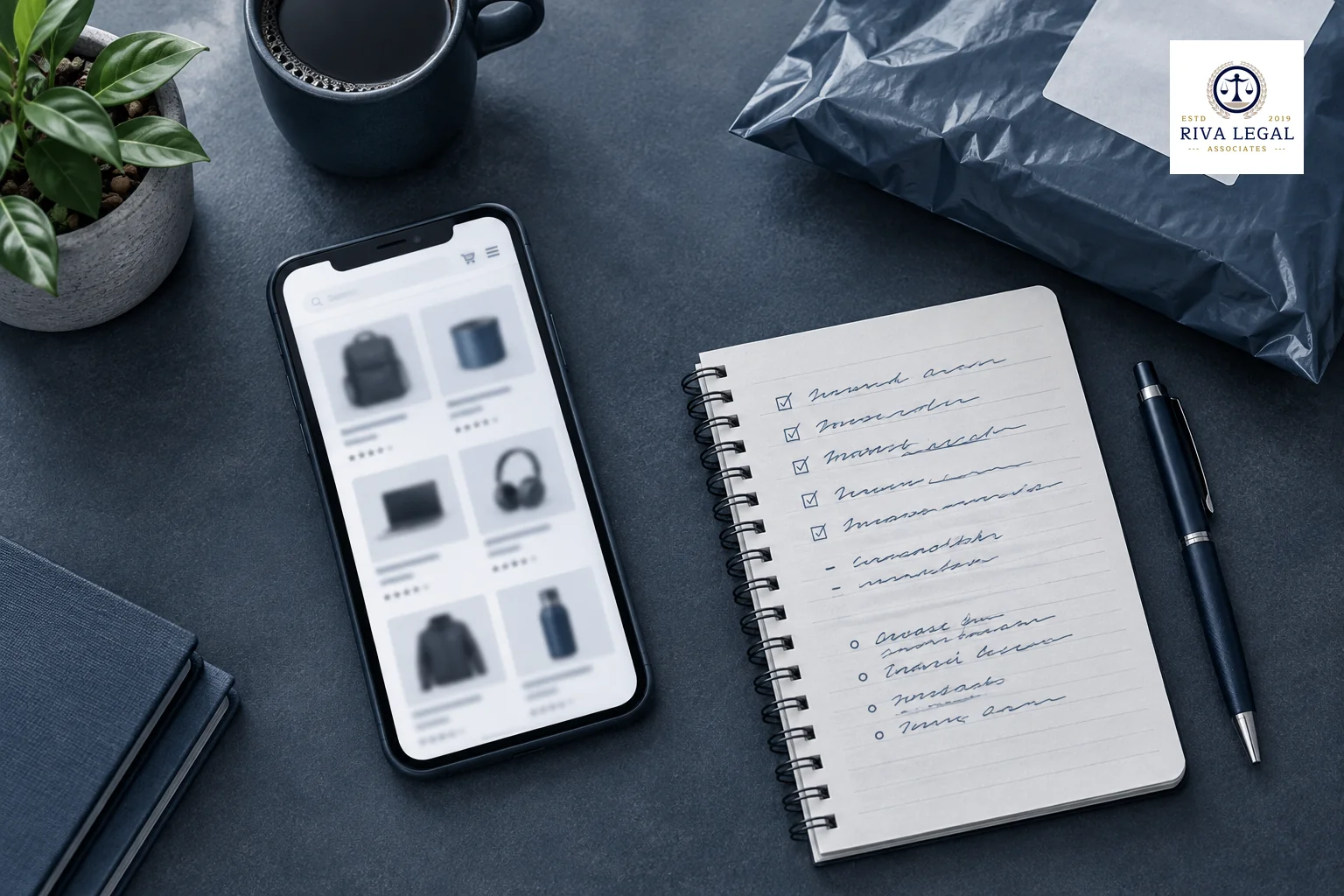
Guidance on marketplace brand protection published in 2026 makes the same point: save the full URL, the listing or product identifier, the seller's name and identifier, the date and time, the price, the delivery location, the product images, the title, the description, the ratings and any claims of authenticity. Screenshots are most useful when they show the whole page and the date.
| Item to record | What to capture | Why it helps |
|---|---|---|
| Listing | Full URL, product identifier, title, description, images, price, ratings | Shows exactly what was offered and where |
| Seller | Seller name, seller identifier, storefront page, any address or business details shown | Identifies who a notice or suit would name |
| Date and context | Date, time, delivery location, full-page screenshots | Fixes when and how the listing appeared |
| Your own mark | Registration certificate, register extract, proof of use, product photographs | Shows your rights and how the copy differs from the genuine product |
| Product itself | Test purchase, packaging, invoice, delivery slip, photographs on receipt | Shows whether the goods are counterfeit or genuine |
Test purchases
Where counterfeit goods are suspected, a test purchase gives you the physical item, the packaging and a tax invoice. Keep the parcel sealed in its packaging until it is photographed, and keep the delivery details. Whether a test purchase is needed, and in what form, is a question to confirm with an advocate before you rely on it in a dispute.
Keep the record in one place
Store the files with a simple log noting who captured each item and when. If the matter reaches a court, a dated and consistent record is easier to put before it than screenshots collected over weeks without context.
3. Which platform takedown routes should you try first?
Start with the marketplace's own brand-owner reporting tool, supported by your registration details and evidence. It is usually the quickest and least costly step, and it does not require a court order. If it fails or the same seller returns, a written notice to the platform's grievance contact or the seller is the next step.
Academic writing on Indian ecommerce law supports this route. A National Law School of India University paper argues that brand owners cannot reasonably be expected to go to court for each counterfeit listing, and that marketplaces should accept takedown notices from them. That is a view in the literature, not a guarantee of how any platform will act.
The Alliance University centre for intellectual property rights has also noted in a 2025 blog post on trademark disputes in ecommerce that clear, legally valid takedown notices matter for brand owners dealing with intermediaries. A short, precise notice is more useful than a long complaint.
| Route | Cost and speed | Needs | Suits |
|---|---|---|---|
| Marketplace brand-protection report | No court fee; response times vary by platform | Registration details, listing links, evidence | First step for most look-alike or counterfeit listings |
| Written notice to the platform's grievance officer | Low cost; depends on platform response | Clear statement of the mark, the infringing listing and the rights claimed | When the tool is unavailable or the report is closed without a reason |
| Cease-and-desist notice to the seller | Moderate cost; seller response varies | Identifiable seller, registration, evidence | Seller is traceable and the dispute may settle without a suit |
| Court action | Highest cost and longest; interim relief can be sought early | Full evidence, pleadings, advocate on record | Counterfeits, repeat sellers, anonymous sellers, ignored notices |
What a good platform report contains
- Your registration number, class and goods or services covered.
- The exact listing links, one per report line.
- A plain description of how the listing uses or copies the mark.
- Photographs that show the difference between the genuine product and the listing, where goods are involved.
- A statement that you are the owner or an authorised representative.
Keep a copy of every submission and any reference number the platform issues. If the listing returns under a new seller name, note the new identifiers and report again, citing the earlier report.
The legal backdrop for platforms
Marketplaces act as intermediaries under the Information Technology (Intermediary Guidelines and Digital Media Ethics Code) Rules, 2021, and their protection from liability depends on following due diligence requirements. Those rules have been amended more than once, so check the current text on the Ministry of Electronics and Information Technology website or with an advocate rather than relying on a remembered timeline.
The Rules require an intermediary to publish the name and contact details of a grievance officer. They also set time limits for the officer to acknowledge a complaint and to dispose of it. I have not restated the exact periods here because they have changed with amendments. Read the acknowledgement and disposal periods in the current MeitY text, note the date you filed, and escalate only after those periods have run.
4. When does a cease-and-desist notice make sense?
A cease-and-desist notice makes sense when the seller is identifiable, the platform route has failed or the listing keeps returning, and your rights are clear on the register. It sets out the mark, the infringement and a demand with a deadline, and it can lead to a settlement without a suit.
A notice is a letter, not a court order. It carries weight only if the facts and the registration behind it are sound, and the recipient is free to ignore it.
What the notice usually states
- The registered mark, number, class and proprietor.
- The specific listings or products, with dates and links.
- The provision relied on, such as Section 29 of the Trade Marks Act, 1999 for a registered mark.
- What the seller is asked to do: remove the listings, stop using the mark, and disclose stock or sales where appropriate.
- A reasonable period to respond.
Risks to weigh first
A notice alerts the seller. If your evidence is incomplete, listings can be edited or moved before you act again. A notice that overstates your rights, for instance by claiming registration you do not hold, can also create difficulty later. Our guide on enforcing a copyright infringement notice in India covers the parallel steps where a listing copies images or text rather than a mark.
Where a seller replies, the answer often shows whether the dispute is about a genuine reseller, a misunderstanding or a deliberate copy. That reply is evidence and should be kept with the rest of the record.
5. When may court action be needed?
Court action may be needed when goods are counterfeit, the seller is anonymous or keeps relisting, a notice is ignored, or the harm to the brand is continuing. A suit for infringement can seek an injunction, damages or an account of profits, and delivery-up or destruction of infringing goods under Section 135.

Section 134 of the Trade Marks Act allows a registered proprietor to sue in a district court within whose limits they carry on business, and commercial disputes of the required value go to Commercial Courts or the commercial division of a High Court. An order of the Delhi High Court dated 1 March 2023 is an example of how brand owners have approached the court over product images and trademarks displayed on ecommerce platforms.
Pre-institution mediation
Section 12A of the Commercial Courts Act, 2015 generally requires pre-institution mediation before a commercial suit that does not contemplate urgent interim relief. Whether it applies depends on whether urgent relief is genuinely being sought, so the point should be settled with an advocate before filing.
Other forums and related filings
Court is not the only forum connected to a marketplace dispute. If the copying seller has also filed a similar mark, an opposition at the Trade Marks Registry may be relevant; see our explanation of filing a trademark opposition in India. Government fees for such filings are published on the IP India forms and official fees page.
Matters in another state
A seller in Jaipur may face an infringer in Delhi, Mumbai or Bengaluru. Riva Legal Associates works from a single chambers in Jaipur and associates local counsel, who appears on the record, where a court in another state is involved. Whether and how to proceed on your own facts should be decided on independent legal advice.
Hypothetical walkthrough: a look-alike listing
This is an illustration, not a real case. Suppose a Jaipur seller holds a registration for a brand name on household textiles and finds a marketplace listing for similar textiles under a near-identical name.
- Before any report: capture the URL, product identifier, seller name, price, images, date and time, and place a test purchase. Pull the register extract and certificate.
- Platform report: submit the registration number, class, the listing link, side-by-side photographs and a statement of ownership. Keep the reference number.
- Notice: if the seller is identifiable and the listing stays or returns, send a notice citing the mark, the dated listings, Section 29 and a response deadline. Attach nothing you would not want the seller to see; keep originals.
- Plaint: if the notice is ignored or the seller relists, the same record goes into the plaint: register extract, dated captures, test-purchase invoice and packaging, the platform reference numbers, the notice and any reply.
6. Common mistakes in trademark infringement complaints on marketplaces
The mistakes sellers make tend to cluster around timing and precision rather than law. Most are avoidable with a short checklist.
- Contacting the seller first. The listing may change or disappear before it is captured.
- Vague reports. A complaint saying only that "a brand is copied" gives the platform nothing to match against your registration.
- Overclaiming. Claiming registration or a class that the certificate does not cover weakens the whole complaint.
- Treating genuine resale as counterfeiting. Resale of genuine goods is a different question from a copy.
- Letting the registration lapse. A mark that is not renewed on time loses the footing for statutory claims; see trademark renewal deadlines and late fees for the timeline.
- Stopping after one report. Relisting under new seller names is common, so a record of repeat listings matters.
Scholarly commentary, such as a bulletin from Chanakya National Law University, notes that owners of intellectual property who find their content on an ecommerce website without permission have a right to ask for its removal, and that intermediary liability turns on how the platform acts after notice. Platform behaviour and the rules around it continue to develop, so current text should always be checked.
For a trademark owner, the practical position is straightforward: a clean evidence record, a registration that matches the complaint, and a measured escalation from platform report to notice to court. Each stage depends on the one before it, and each should be chosen on the facts of the listing in front of you.
This content is published for general information only. It is not legal advice, an advertisement, or a solicitation of work, and reading it does not create an advocate-client relationship. In keeping with the Bar Council of India Rules, Riva Legal Associates does not solicit work or advertise.