
Design Registration in India: Protecting Product Aesthetics
Design registration in India protects the visual appearance of a product, its shape, configuration, pattern or ornamentation, not the way it works. Under the Designs Act, 2000, a registered design gives the proprietor an exclusive right to that appearance for up to 15 years, provided the design was new and had not been published or used anywhere before the application was filed.
Key Takeaways
- Protection term: An initial period of 10 years from the date of registration, extendable once by 5 years, for a maximum of 15 years total.
- Novelty is strict: The design must not have been published, used, or disclosed publicly anywhere, including at a trade fair or online listing, before the filing date.
- Only appearance qualifies: Shape, configuration, pattern, ornament or composition of lines and colours applied to an article can be registered. Purely functional or mechanical features cannot.
- Examination and cancellation both apply: The Patent Office examines each application before granting registration, and a granted design can later be cancelled under Section 19 if grounds such as prior publication are established.
- Filing route: Applications go through the design wing of the Patent Office, using Form-1 along with representation sheets showing the article from multiple views.
At a Glance: Design Registration Snapshot
| Aspect | Detail |
|---|---|
| Governing statute | Designs Act, 2000 and Designs Rules, 2001 |
| What is protected | Shape, configuration, pattern, ornamentation applied to an article |
| Initial term | 10 years from the date of registration |
| Extension | One renewal of 5 years, filed before the initial term expires |
| Maximum total term | 15 years |
| Filing form | Form-1, with representation sheets and, where applicable, a statement of novelty |
| Classification system | Locarno Classification, generally one class per application |
| Filing authority | Design wing of the Patent Office, head office at Kolkata with branch offices |
| Who can apply | Proprietor of the design, an assignee, or their agent |
What Counts as a Registrable Design Under Indian Law
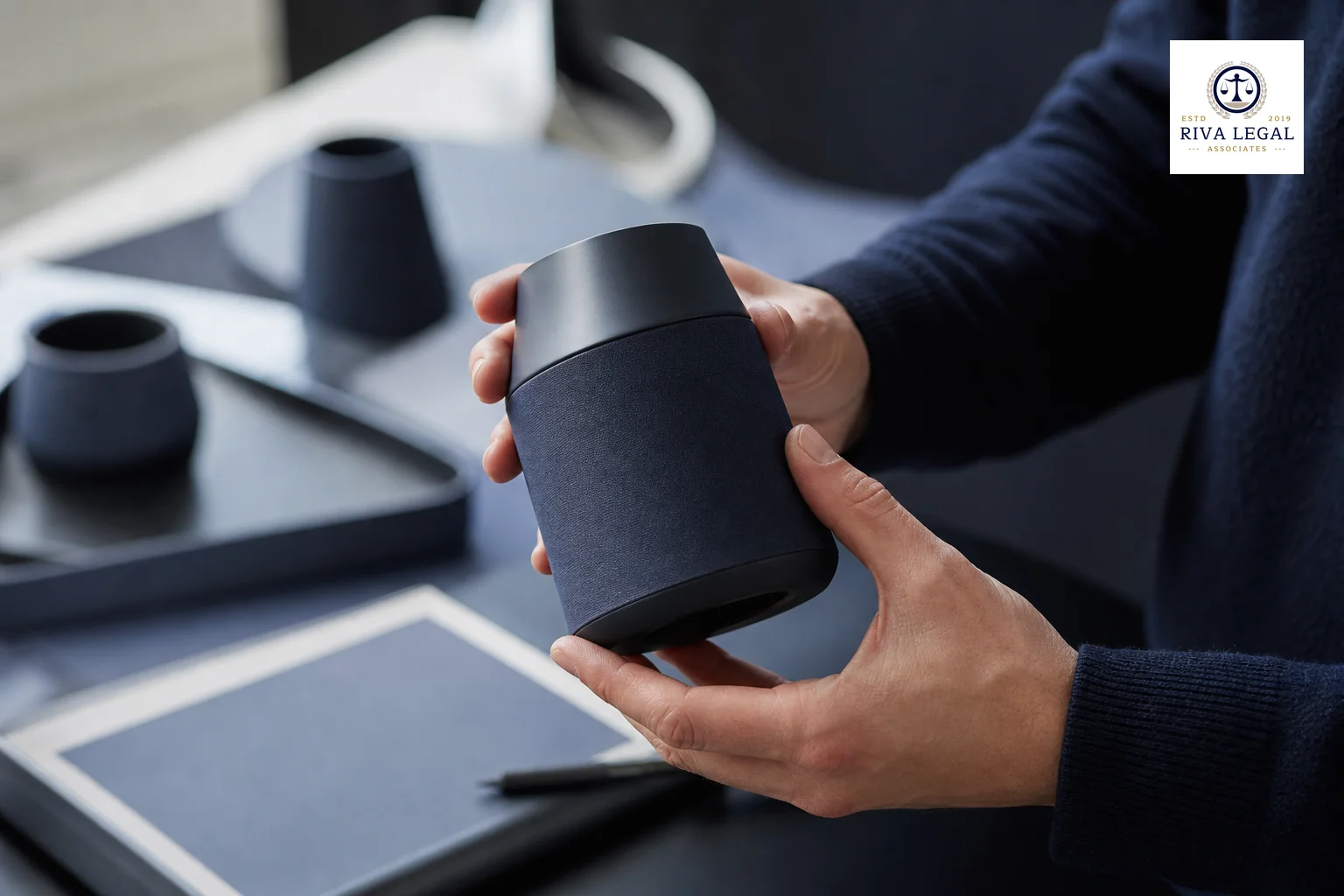
Section 2(d) of the Designs Act, 2000 defines a "design" narrowly. It covers only features of shape, configuration, pattern, ornament, or composition of lines or colours applied to an article, whether in two dimensions or three, by any industrial process. The test is visual. A buyer must be able to judge the article's appeal by looking at it, not by understanding how it works.
Several things fall outside this definition. A method or principle of construction cannot be registered as a design. Features dictated purely by the function the article must perform are excluded too, since the law is protecting aesthetic choice, not engineering necessity. Trademarks and property marks are excluded, since those are governed separately under the Trade Marks Act, 1999. Artistic works that fall under the Copyright Act, 1957, and are not intended for industrial reproduction, are also outside this definition.
This distinction matters in practice. Choosing between patent protection and trademark protection, or determining whether a print belongs under copyright or design law, requires identifying which feature of the product is actually being protected: the mechanism, the brand, the artwork, or the shape.
1. Check Novelty Before You File
Novelty is the single most common ground on which design applications fail, or on which granted registrations are later cancelled. The design must not have been published in any part of India or elsewhere, or used by anyone, before the date of filing, or before the priority date if a convention application is claimed.
This creates a practical risk that many businesses underestimate. Showing a new packaging shape at a regional trade fair, posting product photos on social media ahead of launch, or listing it on an e-commerce marketplace, all count as publication. Once that happens, the design generally cannot be validly registered afterward. India does not offer a broad grace period for prior disclosure, so the safer approach is to file the application before any public showing, not after.
A search of the Patent Office's design register, and a broader check of published catalogues and marketplaces in the relevant product category, helps establish whether a similar shape already exists. A similar clearance-search logic applies to trademarks, discussed further in running a public search before filing, though the databases and grounds of refusal differ for designs.

2. Classify the Article Under the Locarno Classification
India follows the Locarno Classification system for industrial designs, which groups articles by function and subject matter into numbered classes and subclasses. An application generally covers one article in one class. Filing under the correct class matters, because it affects how the examiner searches for conflicting prior designs, and how quickly the application moves through examination.
A family of related products, say a set of drinkware in matching shapes, sometimes raises the question of whether each variant requires a separate application, or whether a set can be registered together where the rules on sets of articles permit it. Getting the classification and scope wrong at the outset can be difficult to correct later.
3. Prepare the Application: Forms, Representations and Statement of Novelty
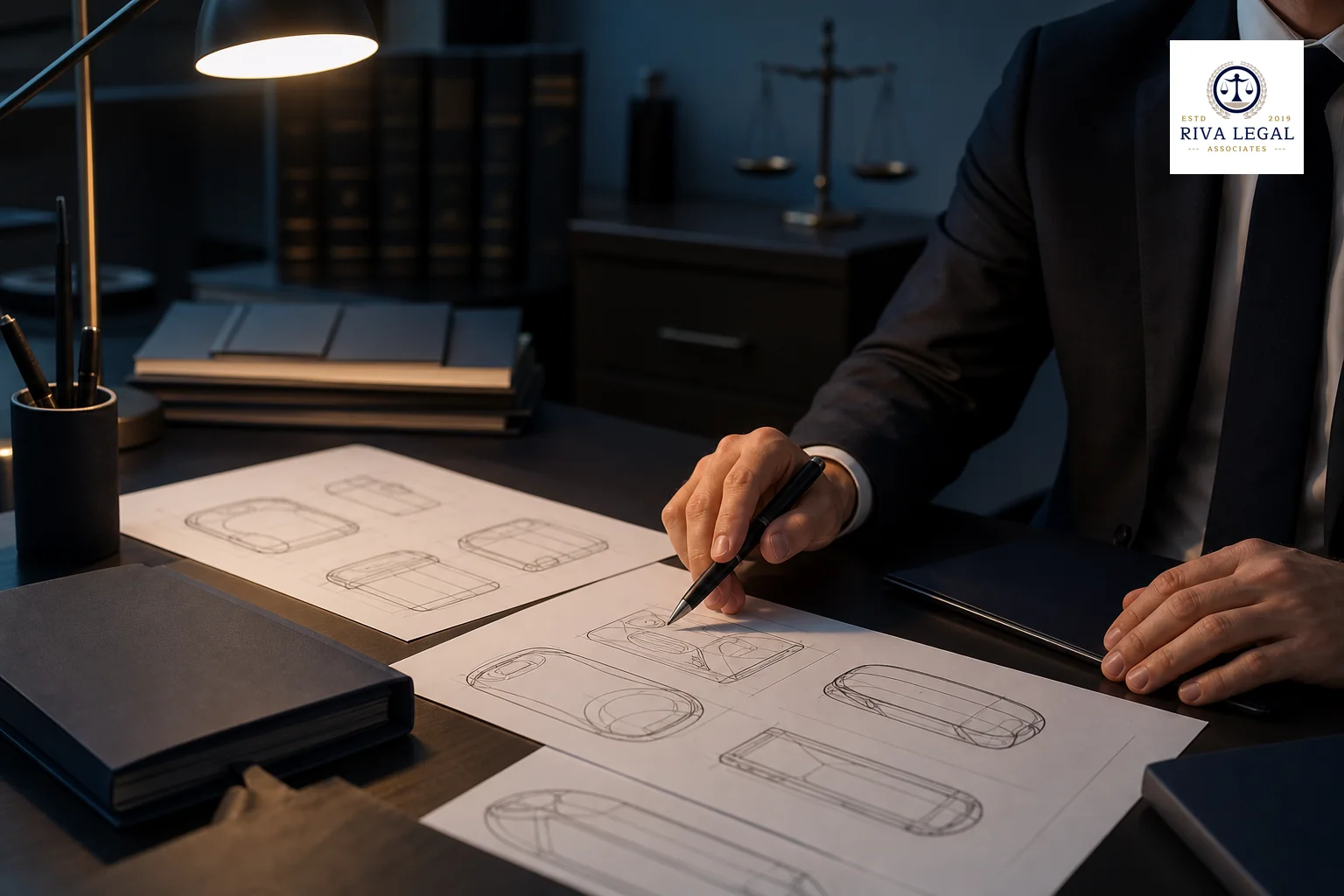
The core filing consists of Form-1, supported by representation sheets that show the article from enough views (front, back, side, top, bottom, perspective) to make the claimed shape or pattern fully clear to an examiner. Where only part of the article's appearance is being claimed, a statement of novelty helps define exactly what is new, and a disclaimer can exclude features that are not part of the claim, such as trademarks appearing incidentally on the article.
Where the applicant has already filed a corresponding application in a convention country within the preceding months, a priority claim can be made, which preserves the earlier filing date for novelty purposes. The application can be filed by the proprietor of the design, by an assignee who has acquired rights to it, or through a registered agent acting on their behalf.
A product spanning multiple categories, such as a device housing and an underlying mechanism, may require parallel filings under both the Designs Act and the Patents Act, 1970. That overlap involves coordinating the right combination of patent, design and trademark filings rather than treating each application in isolation.
4. Filing and Examination at the Design Office
Design applications are filed with the design wing of the Patent Office, which has its head office in Kolkata along with branch offices elsewhere in the country. An examiner reviews the application for compliance with formal requirements, correct classification, and, most importantly, novelty against the prior art the examiner is able to locate.
If the examiner raises an objection, be it on classification, clarity of representation, or a novelty concern, the applicant must respond within the prescribed period. Missing that window can result in the application being treated as abandoned. Once objections are resolved and the examiner is satisfied, the design is registered, and a certificate of registration is issued confirming the date from which the term of protection runs.
Filings and enforcement across more than one state, for example where manufacturing occurs in one location and a marketplace dispute arises in another, can involve coordinating a single filing approach across the relevant states rather than treating each location separately.
5. Understand the Protection Term and Renewal
A registered design is protected for an initial period of 10 years, counted from the date of registration. Before this period lapses, the proprietor can apply to extend protection by a further 5 years on payment of the prescribed renewal fee, bringing the maximum available term to 15 years. Missing the renewal window before expiry means the design falls out of protection, and there is no route back to it once the term has lapsed.
This 15-year ceiling is considerably shorter than the term available for a registered trademark, which can be renewed indefinitely in 10-year cycles as covered in the separate note on trademark registration costs and renewal cycles. Long-term brand strategy around a distinctive product shape sometimes relies on both design registration for the initial period, and trademark protection for shape marks where that route is available, to extend the practical life of the protection.
Design Registration vs Other IP Rights: Where It Fits
Founders new to intellectual property often ask which right applies to a given product feature. The table below sets out the core differences.
| Right | Governing Statute | What It Protects | Maximum Term | Examined Before Grant? |
|---|---|---|---|---|
| Design | Designs Act, 2000 | Shape, pattern, ornamentation of an article | 15 years | Yes |
| Patent | Patents Act, 1970 | New invention or technical function | 20 years | Yes |
| Trademark | Trade Marks Act, 1999 | Brand name, logo, or other source identifier | Indefinite, renewable every 10 years | Yes |
| Copyright | Copyright Act, 1957 | Original literary, artistic, musical or software work | Author's life plus 60 years (varies by work type) | No, arises automatically |
A single product launch often engages more than one of these rights at once. A distinctive bottle shape may qualify for design registration, the label artwork may already carry copyright, and the brand name printed on it needs separate trademark protection. Further background on this distinction appears in registering copyright for creative work in India.
Grounds on Which a Registered Design Can Be Cancelled
Registration is not the end of the story. Section 19 of the Designs Act, 2000 allows any interested person to file a petition before the Controller seeking cancellation of a registered design, on grounds that include prior registration or publication of the same or a similar design, lack of novelty or originality, or the subject matter not qualifying as a registrable design at all.
This is precisely why the novelty check at the filing stage carries so much weight. A design registered without a careful prior search remains vulnerable to a cancellation petition later, often at a point when tooling, packaging, or marketing has already been built around that shape. Keeping dated records of the design's development, including internal drafts and the date it was first shown to anyone outside the company, supports the applicant's position if novelty is ever challenged.
Common Situations Where Design Registration Arises
Several recurring categories come up in practice among businesses operating in Rajasthan and across India more broadly:
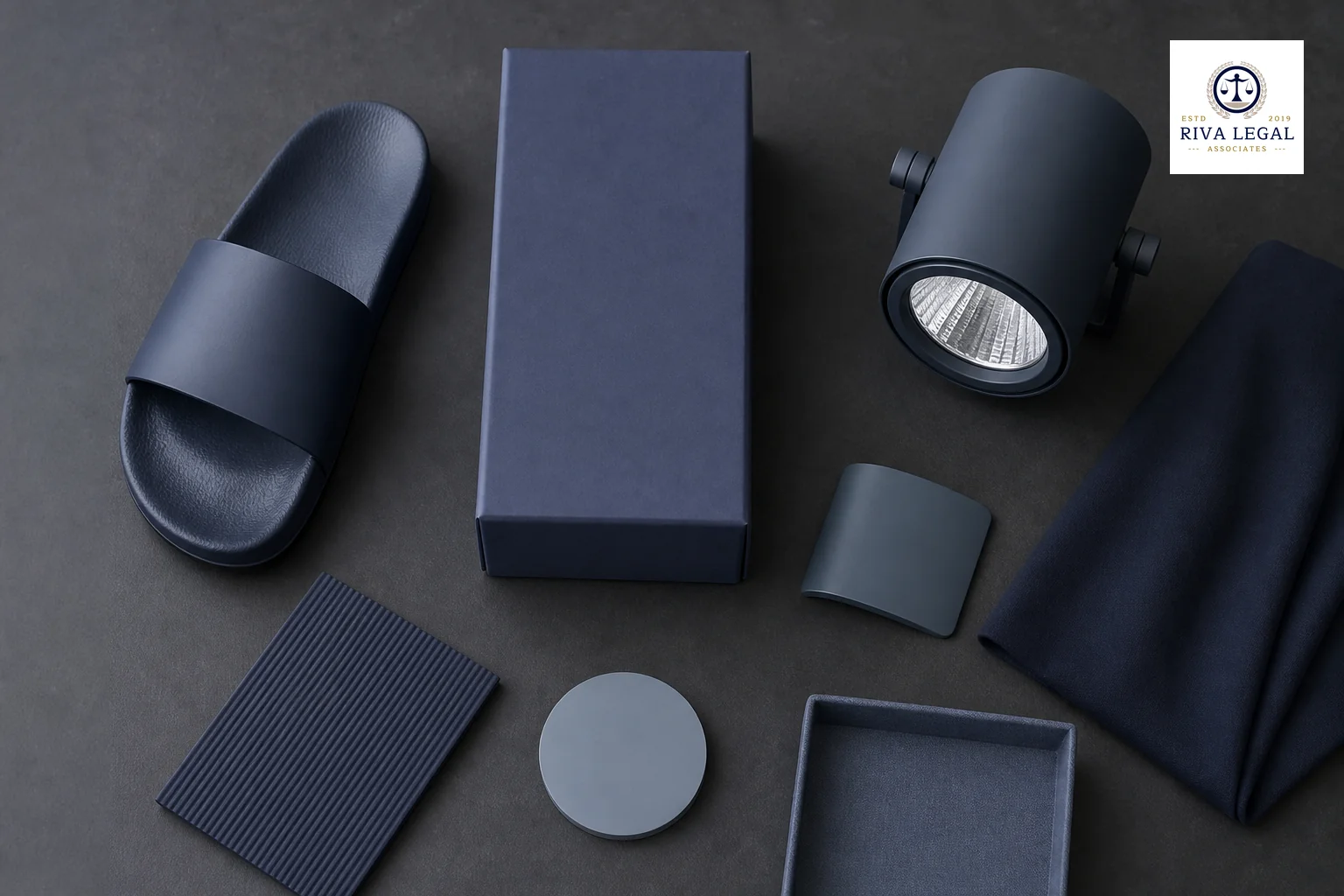
- Footwear and fashion accessories: Sole patterns, heel shapes and buckle configurations are frequently registrable, distinct from any trademark on the brand name itself.
- Consumer packaging and containers: A distinctive bottle, jar or carton shape can be registered separately from the label design, which may instead be a copyright matter.
- Furniture and lighting fixtures: Original silhouettes and surface treatments on furniture pieces or light fittings are common subjects of design applications.
- Surface patterns on textiles: A woven or printed pattern intended for industrial reproduction on fabric may fall under design law rather than copyright, depending on how it is applied and reproduced.
Design protection is sometimes only considered after a competitor has already copied a shape. Building this into the product development timeline, alongside patent and trademark clearance, is generally more effective than attempting to register or enforce rights after a copy has already reached the market. Ongoing IP review of this kind is sometimes addressed through the arrangements described in outsourced general counsel, rather than handling each filing as an isolated, one-off task.
Frequently Asked Questions
Can a functional feature be registered as a design?
No. A feature dictated solely by the function the article must perform is excluded from the definition of a registrable design under the Designs Act, 2000. Only the visual, non-functional aspects of shape, pattern or ornamentation qualify.
What happens if the design is copied before registration is granted?
Rights under the Designs Act generally arise from registration itself, so the available remedies depend on the specific facts, including whether the application was already pending and what other rights, such as copyright in an underlying drawing, might apply. This is a fact-specific question that depends on the particular circumstances rather than a general rule.
Can a design registered in India be extended internationally?
India is not currently a member of the Hague System for the international registration of industrial designs, so protection obtained in India does not automatically extend abroad. Separate national or regional applications are generally required in each country where protection is sought.
How is a registered design different from a patent for the same product?
A design protects how a product looks; a patent protects how it works or is constructed. The two can coexist on the same product, for instance a device whose housing shape is registered as a design while its internal mechanism is separately patented, a distinction discussed further in the note on the difference between design and patent protection for products.
Design registration in India runs on strict timelines and a narrow definition of what qualifies, and the cost of getting the novelty assessment or classification wrong is a registration that can later be challenged and cancelled.
This content is published for general information only. It is not legal advice, an advertisement, or a solicitation of work, and reading it does not create an advocate-client relationship. In keeping with the Bar Council of India Rules, Riva Legal Associates does not solicit work or advertise.