
Patent Protection for Life Sciences Startups: 2026 Costs
Patent protection for life sciences startups in India runs through the same statutory stages as any other invention under the Patents Act, 1970, but biotech, diagnostics and medical device applications typically cost more at the drafting and examination stages because of technical complexity, sequence data, and a higher likelihood of objections under Section 3(d). Founders who budget only for the government filing fee are usually underprepared.
Key Takeaways
- Government fees scale by applicant type: a DPIIT-recognised startup or small entity pays a reduced government fee compared with a large company, across filing, examination and other statutory stages.
- Drafting cost varies by sub-sector: a biotech process claim involving sequence listings or a diagnostic method claim touching Section 3(i) generally needs more drafting time than a straightforward mechanical medical device claim.
- Section 3(d) is a recurring cost driver: applications claiming new forms, derivatives or combinations of known biological or chemical substances face a higher chance of an examination objection, which adds response cost.
- Opposition exposure is real: life sciences patents, particularly pharma-adjacent biotech filings, attract pre-grant and post-grant opposition under Section 25 more often than mechanical inventions, and founders should budget a contingency for this.
- Provisional filing helps when data is incomplete: founders can secure a priority date with a provisional specification and complete the full specification within twelve months, spreading cost over time.
At a Glance: Life Sciences Patent Cost Stages
| Stage | What It Covers | Applies To |
|---|---|---|
| Patent search | Prior art and freedom-to-operate check | All applicants, before drafting |
| Provisional specification | Secures an early priority date | Inventions still generating data |
| Complete specification drafting | Full technical disclosure and claims | Must follow within 12 months of provisional |
| Government filing fee | Statutory fee under the Patents Rules | Scaled by applicant category (natural person/startup/small entity/large entity) |
| Request for examination | Triggers substantive review by the Patent Office | Must be filed within 48 months of priority date |
| Response to examination report | Addressing objections, including Section 3(d) | Common in biotech and diagnostic filings |
| Opposition defence (if any) | Pre-grant (Section 25(1)) or post-grant (Section 25(2)) | More frequent in life sciences than mechanical fields |
| Grant and renewal | Annual renewal fees to keep the patent in force | All granted patents, for up to 20 years |

What Counts as Patentable Subject Matter in Life Sciences
Not every biological discovery qualifies for a patent in India. The Patents Act, 1970 carves out specific exclusions that apply more heavily to life sciences than to most other technology fields, and understanding them shapes both strategy and cost.
Section 3(d) bars patents for a mere new form of a known substance unless it shows a significant difference in efficacy. This provision, tested prominently in pharmaceutical litigation, applies equally to biotech derivatives, isolated compounds, and modified biological molecules. Section 3(c) excludes the mere discovery of a scientific principle or a naturally occurring substance, which matters for startups working on isolated genes, proteins or microorganisms found in nature rather than engineered.
Diagnostic methods face their own hurdle under Section 3(i), which excludes any process for the diagnostic, therapeutic or surgical treatment of humans or animals. A diagnostic startup can often still patent a novel device, reagent, kit or algorithm used in diagnosis, even where the diagnostic method itself is unpatentable. That distinction between a patentable product and an excluded method is one of the more consequential drafting decisions a diagnostics founder will make.
Medical devices, by contrast, are usually assessed as ordinary mechanical, electronic or software-linked inventions, subject to the general novelty, inventive step and industrial applicability tests under Section 2(1)(j). This is one reason medical device applications can, in some cases, move through examination with fewer sub-section-specific objections than a biotech or diagnostic filing, though this varies by claim.
Patent Filing Cost Stages Under the Patents Act, 1970
The filing cost sequence for a life sciences invention follows the same statutory skeleton as any Indian patent application, structured around applicant category and specification type.
Government fees are scaled in three broad applicant tiers: natural persons and startups, small entities, and other entities such as large companies. A DPIIT-recognised startup pays a reduced government fee at both the filing and examination stages, a concession our earlier patent filing cost and process guide covers in fuller detail across all sectors. Life sciences founders incorporated within the eligible period and holding valid DPIIT recognition should confirm this status before filing, since it is applied at the point of fee payment, not retroactively.
A provisional specification is often the right first move for a life sciences invention still in active development, since it locks in a priority date without requiring a complete technical disclosure. The complete specification must follow within twelve months, and this is typically where drafting cost concentrates, because claims must be supported by working examples, sequence data where relevant, and enough disclosure to satisfy Section 10's sufficiency requirement.
Request for examination is a separate fee event, payable any time up to 48 months from the priority date, and it is what actually starts substantive review. Founders sometimes delay this step deliberately, using the window to refine claims, gather additional data, or align the filing with funding milestones.
What Drives Cost Higher for Biotech, Diagnostics and Medical Devices
Technology complexity is the single largest cost variable within life sciences patenting, and it plays out differently across the three sub-sectors.
Biotech applications involving nucleotide or amino acid sequences generally require a sequence listing compliant with WIPO Standard ST.26, submitted alongside the specification. Preparing and formatting this listing, and ensuring the claims map correctly onto it, adds drafting time beyond a standard mechanical application. Applications describing engineered microorganisms, recombinant constructs or gene-editing methods also tend to draw more detailed examiner scrutiny on inventive step, since the field moves quickly and prior art searches must span both patent literature and scientific journals.
Diagnostics filings carry the added burden of separating the patentable product or kit from the excluded diagnostic method, as discussed above. Getting this boundary wrong at drafting stage is a common source of avoidable examination objections, each of which triggers a further response cost and can extend timelines by months.
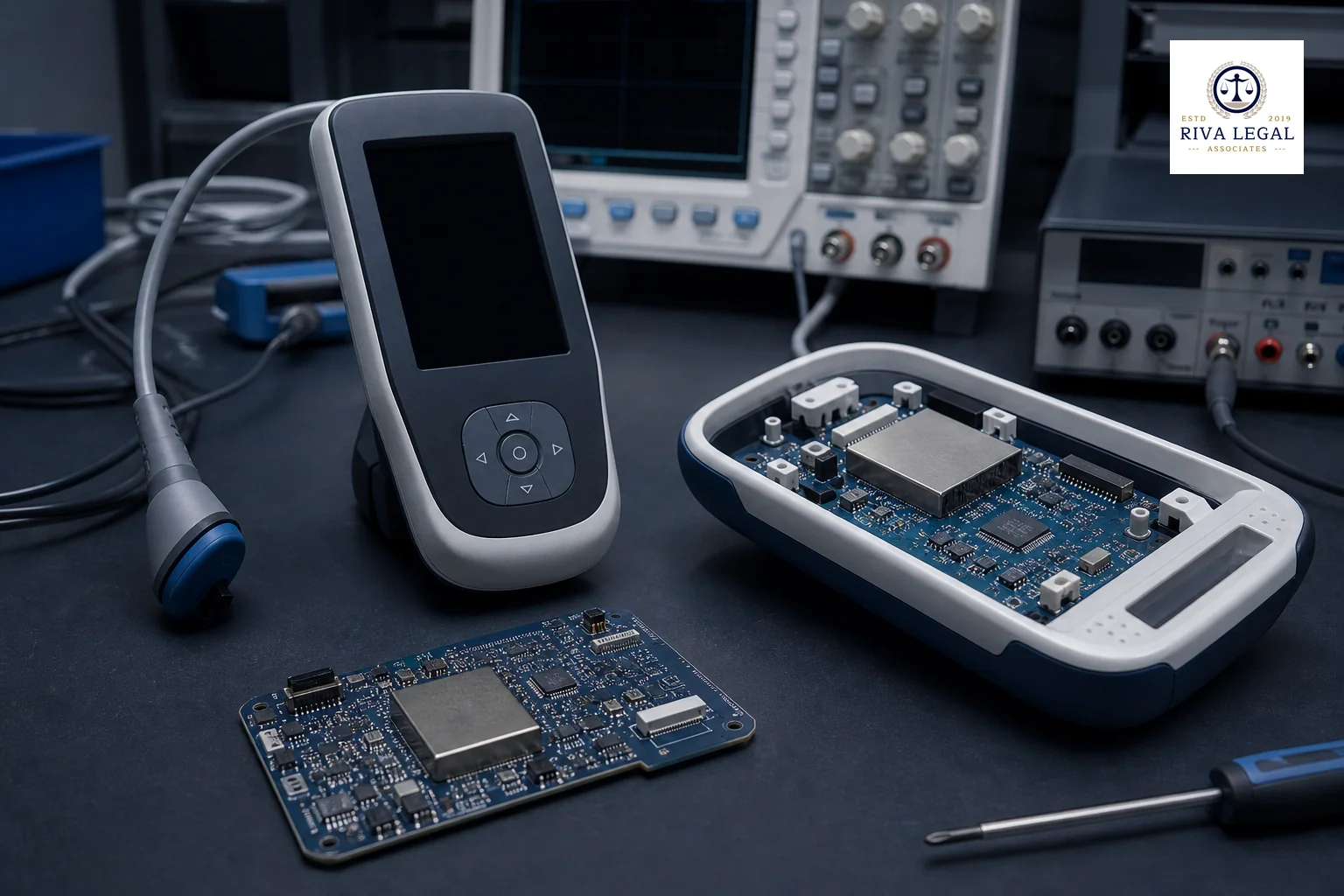
Medical device applications vary widely depending on whether the invention is purely mechanical, involves embedded software, or combines hardware with a diagnostic or therapeutic function. A combination device, such as a diagnostic instrument paired with proprietary software, may need claims drafted across more than one Patents Act framework consideration, which again adds drafting complexity relative to a simple mechanical tool.
Across all three, the number of claims filed affects the fee directly, since government fee schedules charge additionally beyond a threshold number of claims and pages. A life sciences application with detailed dependent claims covering multiple embodiments, formulations, or device variants will generally attract a higher excess claims and page fee than a narrowly drafted mechanical patent.
Biotech vs Diagnostics vs Medical Devices: Cost Comparison
The table below sets out how the three sub-sectors typically compare on the factors that drive budget, without quoting fixed prices, since actual cost depends on claim scope and the specific application.
| Factor | Biotech | Diagnostics | Medical Devices |
|---|---|---|---|
| Typical Section 3 exposure | High (Section 3(d), 3(c)) | High (Section 3(i)) | Lower, usually general novelty/inventive step review |
| Sequence listing needed | Often, for nucleotide/protein claims | Sometimes, for biomarker-based tests | Rarely |
| Common claim structure | Process, composition, method of manufacture | Device, kit, reagent, algorithm (not the diagnostic method itself) | Apparatus, system, sometimes software-linked |
| Opposition likelihood | Comparatively higher | Moderate | Comparatively lower |
| Prior art search scope | Patent literature plus scientific journals/databases | Patent literature plus clinical/diagnostic standards | Mostly patent literature |
| Drafting time relative to a standard mechanical patent | Higher | Higher | Comparable to slightly higher |
How Does Patent Opposition Affect Life Sciences Budget Planning?
Opposition adds an unplanned cost stage because it requires a formal response, sometimes with expert evidence, within statutory timelines under Section 25. Life sciences and pharma-adjacent applications attract opposition more often than mechanical inventions, so founders should hold a contingency reserve rather than treat grant as the final cost event.
A pre-grant opposition can be filed by any person before the patent is granted, while a post-grant opposition is limited to interested persons and must be filed within twelve months of the grant date. Our earlier piece on patent protection for pharma startups in India covers the opposition mechanics in more depth for the closely related pharmaceutical context; life sciences founders working on drug delivery, biologics or diagnostics adjacent to pharma should read both together, since the exclusions and opposition risk substantially overlap.
Budget Planning Considerations for Founders

A workable budget separates cost into stages rather than treating patenting as a single line item. Search, drafting, filing, examination response and possible opposition each carry a different cost driver, and each can be planned for separately as the invention matures.
- Search first: a thorough prior art and freedom-to-operate search reduces the risk of drafting claims that later collapse under an examiner's novelty objection.
- Stage the specification: filing a provisional early and completing the full specification closer to the twelve-month deadline lets founders spread cost across two funding milestones rather than one.
- Confirm DPIIT status before paying fees: the reduced government fee tier only applies where recognition is active and correctly recorded at filing.
- Reserve for objections and opposition: given the higher Section 3(d)/3(i) exposure in life sciences, an unallocated contingency is more useful than assuming a clean, unopposed path to grant.
- Plan for international filing separately: a Patent Cooperation Treaty (PCT) application, if the startup intends to protect the invention outside India, is a distinct cost track with its own timeline, generally due within twelve months of the Indian priority filing.
Is Provisional Filing Worth It for Life Sciences Inventions?
Provisional filing is generally worth it when the invention's data is still being generated, since it locks in a priority date early without forcing a premature, incomplete disclosure. The trade-off is that the complete specification must still follow within twelve months, so the underlying research needs to be far enough along by then.
This matters more in life sciences than in software or mechanical fields, because experimental validation, clinical or pre-clinical data, and sequence confirmation often take longer to finalise than a working engineering prototype. A founder who files a provisional too early, before the invention is clearly defined, risks a complete specification that cannot claim everything the provisional gestured towards.
Jaipur and Pan-India Considerations for Life Sciences Founders
Rajasthan's life sciences and biotech activity, including pharmaceutical manufacturing and agri-biotech research clusters around Jaipur, means founders in the state increasingly face patent questions alongside manufacturing and regulatory compliance work. The appropriate patent office jurisdiction in India is determined by the applicant's place of business or domicile, or by the patent agent's address of service, which is a practical detail worth confirming before filing rather than after.
Life sciences startups with research based in one state and manufacturing or clinical trial sites in another often need coordinated representation across jurisdictions, a challenge covered more generally in our guide on coordinating legal cases across Indian states. The same coordination logic applies to patent prosecution and any related enforcement, since an opposition or infringement matter can surface in a different state from where the original R&D took place.
Founders weighing whether to instruct a smaller, founder-led practice or a larger multi-city IP institution for this kind of work may find our comparison on choosing between a boutique and a large IP firm a useful reference point, independent of sub-sector.
Frequently Asked Questions
Can a naturally occurring gene or protein be patented in India?
A naturally occurring gene or protein, as discovered, generally cannot be patented under Section 3(c), which excludes the mere discovery of a substance occurring in nature. An isolated, purified, or engineered version demonstrating a technical effect beyond the natural substance may be assessed differently, subject to the same efficacy and inventive step tests applied to the specific claims.
Are diagnostic methods excluded from patenting in India?
Yes, Section 3(i) of the Patents Act, 1970 excludes processes for the diagnostic, therapeutic or surgical treatment of humans or animals from patentability. A diagnostic device, kit, reagent or algorithm used within that process can still be assessed on its own merits, even where the diagnostic method itself falls outside patentable subject matter.
How long does patent examination take for a life sciences application?
Examination timelines vary by application backlog and objection complexity, and life sciences filings involving Section 3(d) or 3(i) issues often take longer to resolve than mechanical applications because responses may require additional technical or comparative data. Requesting examination early, within the 48-month window, does not guarantee a faster grant, since it depends on the Patent Office's queue and the number of objection rounds.
Founders can review the official fee schedule and forms published by the Office of the Controller General of Patents, Designs and Trade Marks (IP India), and the statutory text of the Patents Act, 1970 on the India Code portal, before finalising any budget for a life sciences filing.
For a broader comparison of drafting and government fee stages that apply across sectors, see our Patent Filing Cost & Process in India 2026 guide, and for the closely adjacent pharmaceutical context, our Patent Protection for Pharma Startups in India: 2026 Guide.
This content is published for general information only. It is not legal advice, an advertisement, or a solicitation of work, and reading it does not create an advocate-client relationship. In keeping with the Bar Council of India Rules, Riva Legal Associates does not solicit work or advertise.