
Provisional Patent Application India: When Filing One Buys You Time
A provisional patent application in India fixes an early filing date for an invention that is still being developed. It gives you 12 months to file the complete specification. It does not lead to examination or grant by itself, and it creates no enforceable patent right unless a complete specification follows in time.
The Indian Patent Office states that a complete specification must be filed within 12 months of the provisional specification, with no further extension after that period expires. This note is about what happens before the filing: what a founder or researcher in Jaipur or elsewhere in India should decide and assemble so that those 12 months are useful.
It is written by Riva Legal Associates, a Jaipur intellectual property practice whose principal, Richa Vaishnav, is a registered patent agent with 10+ years in patent searching, filing and prosecution across life sciences, chemistry and mechanical fields. What follows is general process information.
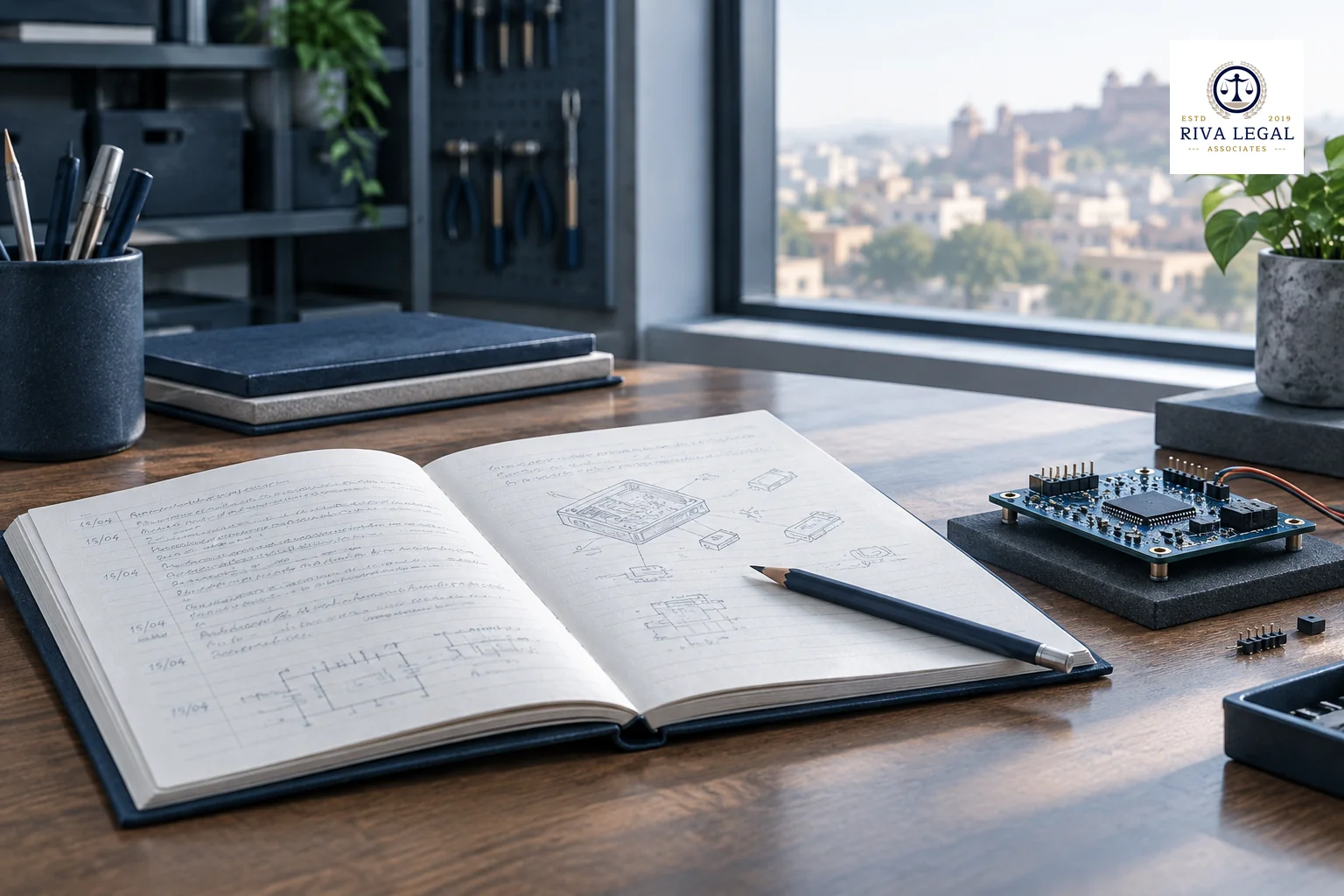
What does a provisional patent application in India actually buy you?
The Patent Office manual describes the purpose plainly: an inventor whose work has not reached its final stage may submit a description of the invention as a provisional specification, and that secures a priority date for the application. The date matters because Indian patent law rewards the first to file, not the first to invent.
What it secures
- A priority date for whatever the provisional specification genuinely describes.
- Room to keep developing the invention, testing variants and gathering data for 12 months.
- Time to approach investors, collaborators or a pilot customer after the filing, with the earlier date already on record.
What it does not secure
- It does not get examined. Examination begins only after a complete specification is on file and a request for examination is made.
- It does not protect matter that was never described in it. A later claim can only claim the earlier date for what the provisional actually supports.
- It does not extend itself. The 12-month limit is fixed, and the application is deemed abandoned if the complete specification is not filed in time (Section 9 of the Patents Act, 1970).
Filing is done online, and a visit to the office is not needed. The Patent Office explains that online filing is available and physical filing is for cases where offline filing is required. Which office handles the application depends on where the applicant resides or does business; the jurisdiction page sets out the rule.
What goes into a provisional specification?
A provisional specification should carry a title, the field of the invention, the background, and a description of how the invention works, with drawings where they help. Claims are not required at this stage. The description is what later supports the claims, so it should be as full as the record allows.
Hypothetical example: thin versus detailed
Suppose two founders each file a provisional for a similar device. The first writes three lines naming the idea. The second describes the mechanism step by step, two alternative materials and a labelled drawing. A year later both want to claim the alternative material. Only the second provisional describes it, so only that claim can rely on the earlier date. The first claim carries the later complete-specification date.
How to file a provisional specification
- Prepare the specification with the title, field, background, description and drawings.
- Identify the correct Patent Office under the jurisdiction rule, based on where the applicant resides or does business.
- Complete the application form (Form 1) and mark the specification as provisional (Form 2). Check the current forms on the Patent Office website.
- File online through the Patent Office portal with the fee prescribed in Schedule I. Fee categories depend on the type of applicant, so confirm the current fee schedule before paying.
- Record the filing date and application number, and diarise the 12-month deadline.
We do not publish our fees on the website. Fees for drafting can be discussed in the initial consultation, which carries no charge.
Is a provisional filing the right move for your project?
A provisional filing fits when you have a working technical concept but development is still continuing, and you want a priority date before any public disclosure. It fits poorly when you hold only a broad commercial idea, or when the invention is already fully developed and ready to be claimed in a complete specification.
The table below sets out common situations. It is a way of thinking, not a rule, and the right choice turns on the facts of each invention.
| Where your project stands | Usual direction |
|---|---|
| A broad commercial idea, no technical mechanism yet | Develop the technical side first; a provisional with little to describe supports very little later |
| A working technical concept, development continuing | A properly drafted provisional specification is a reasonable fit |
| Significant new features developed after an earlier provisional | Consider a further filing for the new matter, and keep the 12-month clock of each filing in view |
| A finished invention with data, drawings and clear claims | A complete specification may be the more direct route |
| A talk, paper, demo or launch is scheduled soon | File before the disclosure; the order matters more than the type of filing |
Public disclosure is the real trigger
The Patent Office has published a guide for student researchers that makes the point directly: a conference talk, a published paper, a video or even a public demo can be treated as prior art against your own later application. Disclose first and you may lose the right to patent what you invented.
For founders the same logic covers investor decks sent without confidentiality terms, a pitch-day demo, a product page, or a post describing how the device works. If any of these is coming, the filing date should come first. Our post on when to file a provisional patent application covers the basic filing questions, so this note does not repeat them.
What should you gather before filing?
Before filing, gather a written invention disclosure, drawings and test data, the full names and addresses of every inventor and the applicant, proof of who owns the invention, a dated log of every public disclosure, and the results of a prior art search. These records decide how much the provisional can later support.
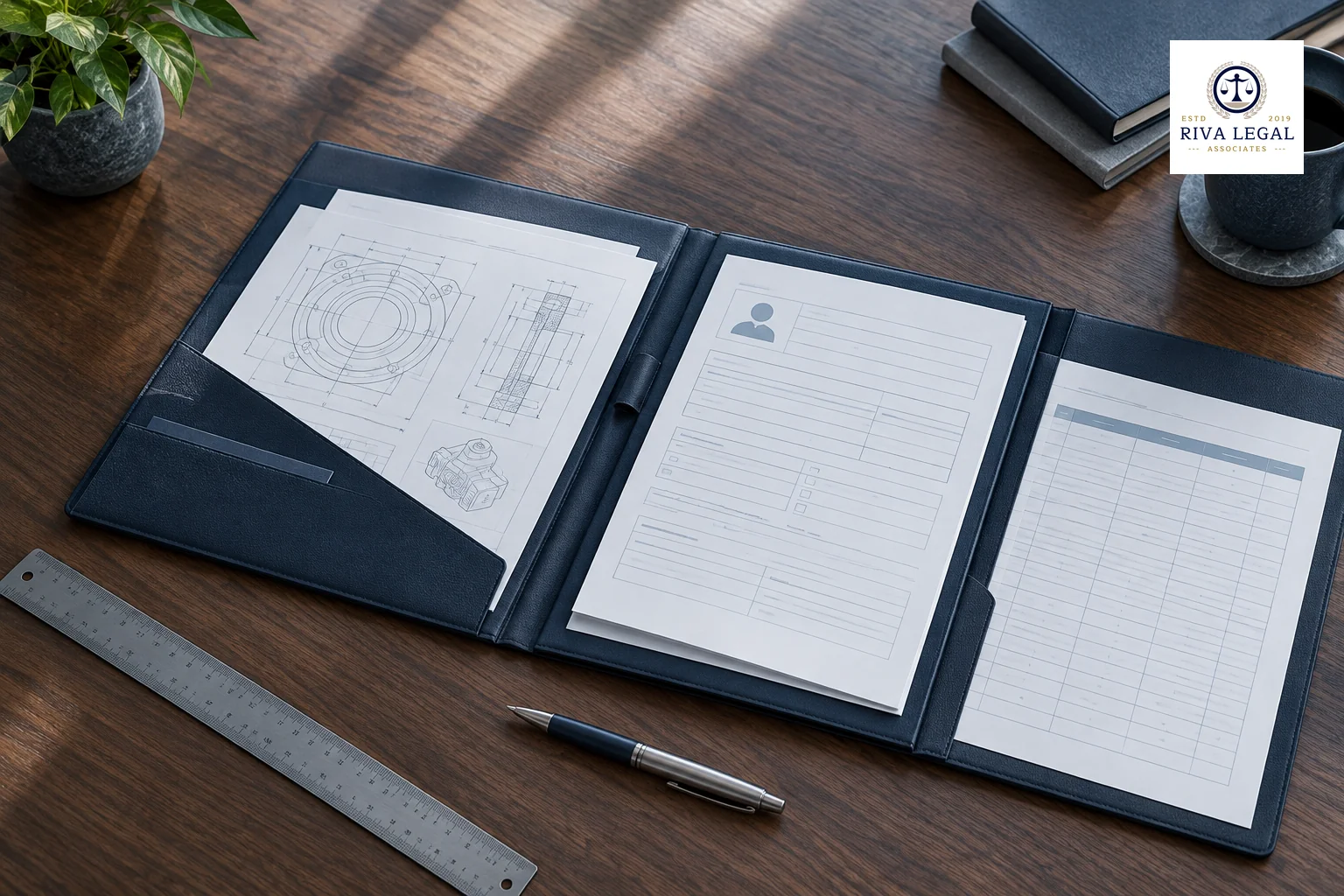
A provisional specification is only as useful as what it describes. Thin or vague text leaves little to rely on when the complete specification is drafted a year later. Most of the work is therefore record-keeping, done by the people who know the invention, not drafting.
Preparing the invention disclosure record
Start with a plain written account of the invention. A college patent filing procedure lists the questions to answer: what the innovation is and how it works, what problem it solves, its field of application, and its benefits. Add the points below.
- The mechanism. Describe how it works step by step, not only what it does.
- The problem. State what existing approaches fail to do and why.
- Embodiments and variants. Record alternative materials, dimensions, configurations or code architectures you have considered, even if untested.
- Data. Attach experimental results, test conditions and dates. Include results that did not work; they help define limits.
- Drawings. Sketches, block diagrams or flowcharts are enough at this stage if they are clear and labelled.
Inventor, applicant and ownership details
Mistakes here are common and avoidable. Collect the full legal names, addresses and nationalities of every person who contributed to the inventive idea, and separately identify the applicant, who may be an inventor, a company or an institution.
- Inventors: only people who contributed to the inventive concept; a person who merely built or funded the prototype may not qualify.
- Applicant: the person or entity entitled to apply, supported by an assignment or employment terms where the applicant is not the inventor.
- Employer or institution claims: check employment contracts, university policies and any grant or collaboration terms that may give someone else a stake.
- Startup status: if you hold recognition as a startup, keep the certificate to hand, since the filing category can depend on it.
A dated log of disclosures and confidentiality
List every occasion on which the invention has been shown or described outside the team: presentations, prototypes shown to customers, thesis chapters, grant applications, trade-fair stands. Note the date, the audience and whether a confidentiality agreement covered it. A written NDA signed before a disclosure is evidence that the conversation was confidential, though it is not a substitute for filing.
A prior art search
A search of existing patents and literature before filing helps you describe what is different about your invention. It also shows whether the idea is already known. A provisional filed without any search can lock in a description that sits too close to published work. The mistakes drafters see most often are collected in our note on patent drafting mistakes before filing.
How should you use the 12-month window?
Use the 12 months to keep developing, record each improvement with a date, and decide before month 12 what the complete specification will claim. The complete specification must be filed within 12 months of the provisional, with no extension available, or the application is treated as abandoned.
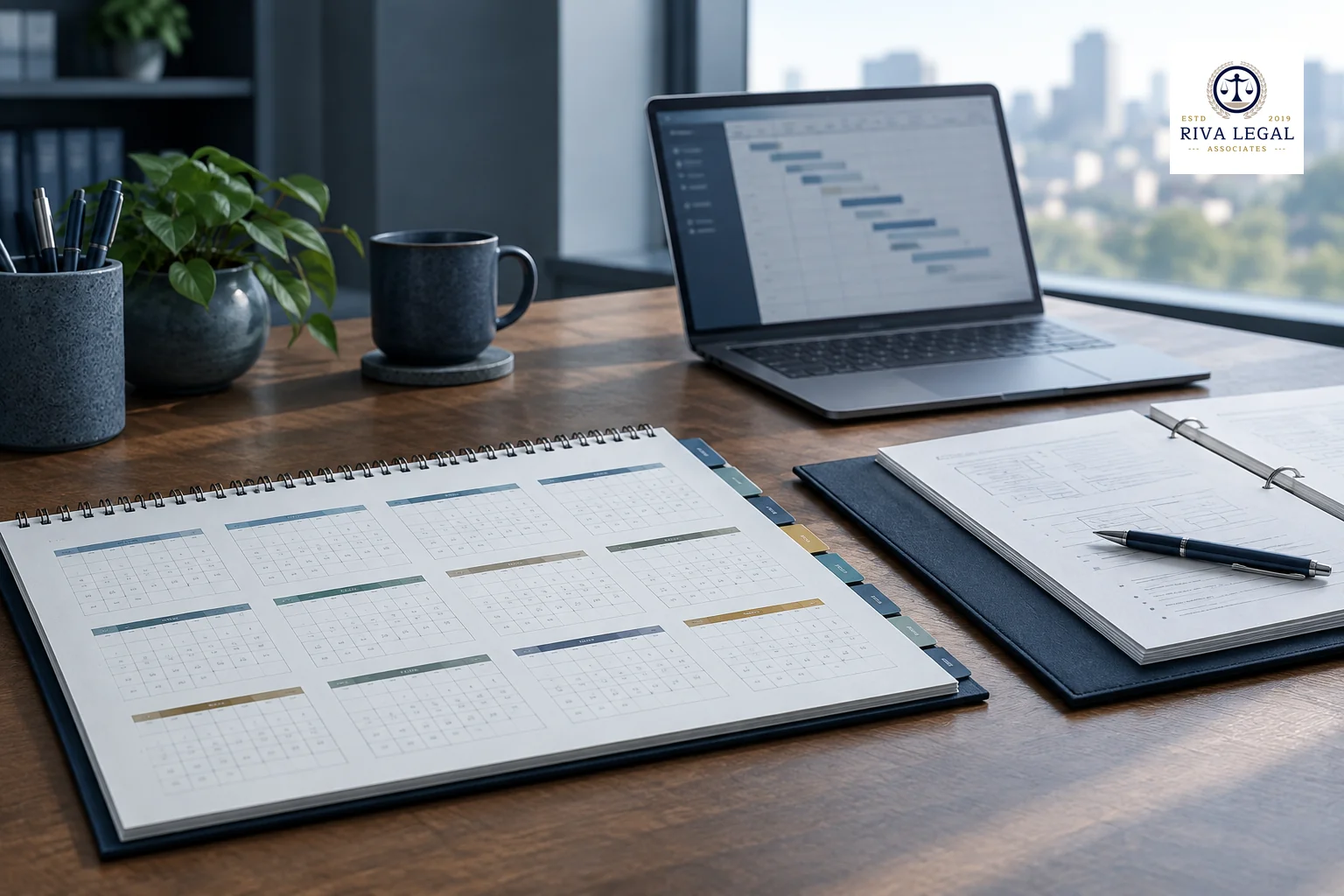
The window runs from the filing date of the provisional. Treat it as a project plan with milestones, not a single deadline in the distance. The table below shows a sensible sequence; the dates are counted from the provisional filing date.
| Stage | What to do |
|---|---|
| Filing day | Provisional specification filed; note the date and application number in the project record |
| Months 1 to 6 | Continue development; keep dated notes of every improvement, test and design change |
| Months 6 to 9 | Review the record against the provisional; identify what is new matter and what claims the data can support |
| Months 9 to 11 | Settle claims, drawings and inventor details; draft the complete specification |
| Before month 12 | File the complete specification; there is no extension after the 12 months |
After the complete specification
Filing the complete specification does not start examination automatically. The Patent Office's roadmap says the application is not examined if Form 18 or 18A is not filed within 31 months from the filing or priority date, whichever is earlier.
After examination, a First Examination Report is issued, and the applicant has six months to reply, with a further three months possible on request, as set out in the Patent Office roadmap. Section 9 is understood to allow a 3-month extension of the complete specification period in some conditions, so confirm with the Act or an adviser whether it applies to you; do not plan around it.
The next stages are described in our overview of patent prosecution from examination report to grant. Once an application number exists, the status can be checked on the Patent Office's public search, which is a useful habit during the whole 12 months.
Capturing improvements during development
Development rarely stands still. New features developed after the provisional filing are not covered by its priority date unless the provisional described them. Two routes are generally considered: include the improvements in the complete specification, accepting that they carry the later date, or make a further filing for them. Each has consequences, and a related-inventions rule can apply where several provisionals are cognate, so the choice is worth deciding with advice on the actual facts.
Anyone thinking of filing abroad should also note that foreign priority generally runs on a 12-month clock from the first filing, so overseas plans belong in the same timetable.
Common ways a provisional filing falls short
- Filing after the disclosure. A talk, demo or publication that came first can count against the later application.
- A placeholder description. A few lines about the idea give a priority date that covers very little. The specification should describe the invention well enough for someone skilled in the field to understand it.
- Treating the 12 months as flexible. The period cannot be extended, and a conversion that is a few days late is lost.
- Inconsistent inventor and applicant details. Errors found later can be time-consuming to correct and can raise ownership questions at a bad moment.
- Ignoring what was developed afterwards. New features that were never recorded are hard to describe accurately in a complete specification.
- Assuming a provisional means protection. It holds a date only. Nobody can be stopped from copying on the strength of a provisional alone.
Related steps once the provisional is on file
Not every invention qualifies for a patent, and a provisional does not change that. Whether the subject matter is patentable at all is covered in our note on what can and cannot be patented in India. That question is better settled before a filing than after the 12 months have run.
Founders in Jaipur and across Rajasthan often work with distributed teams, contractors and advisers, which makes the disclosure log and ownership records above more important, not less. A single shared document, updated with dates, is usually enough to keep them in order. The statutory rules themselves sit in the Patents Act, 1970 and the Patents Rules, 2003, and the Patent Office's website publishes the current forms and procedure.
This content is published for general information only. It is not legal advice, an advertisement, or a solicitation of work, and reading it does not create an advocate-client relationship. In keeping with the Bar Council of India Rules, Riva Legal Associates does not solicit work or advertise.